1/5

Project Manager Career Map
June 22, 2026 · 8:20 AM
Gallery
A project manager is the person who turns a goal, deadline, budget, and group of specialists into a finished piece of work. BLS describes the role as coordinating budget, schedule, staffing, and other project details, while O*NET adds procurement, staffing, timeline, and client contact to the core definition. 1 2
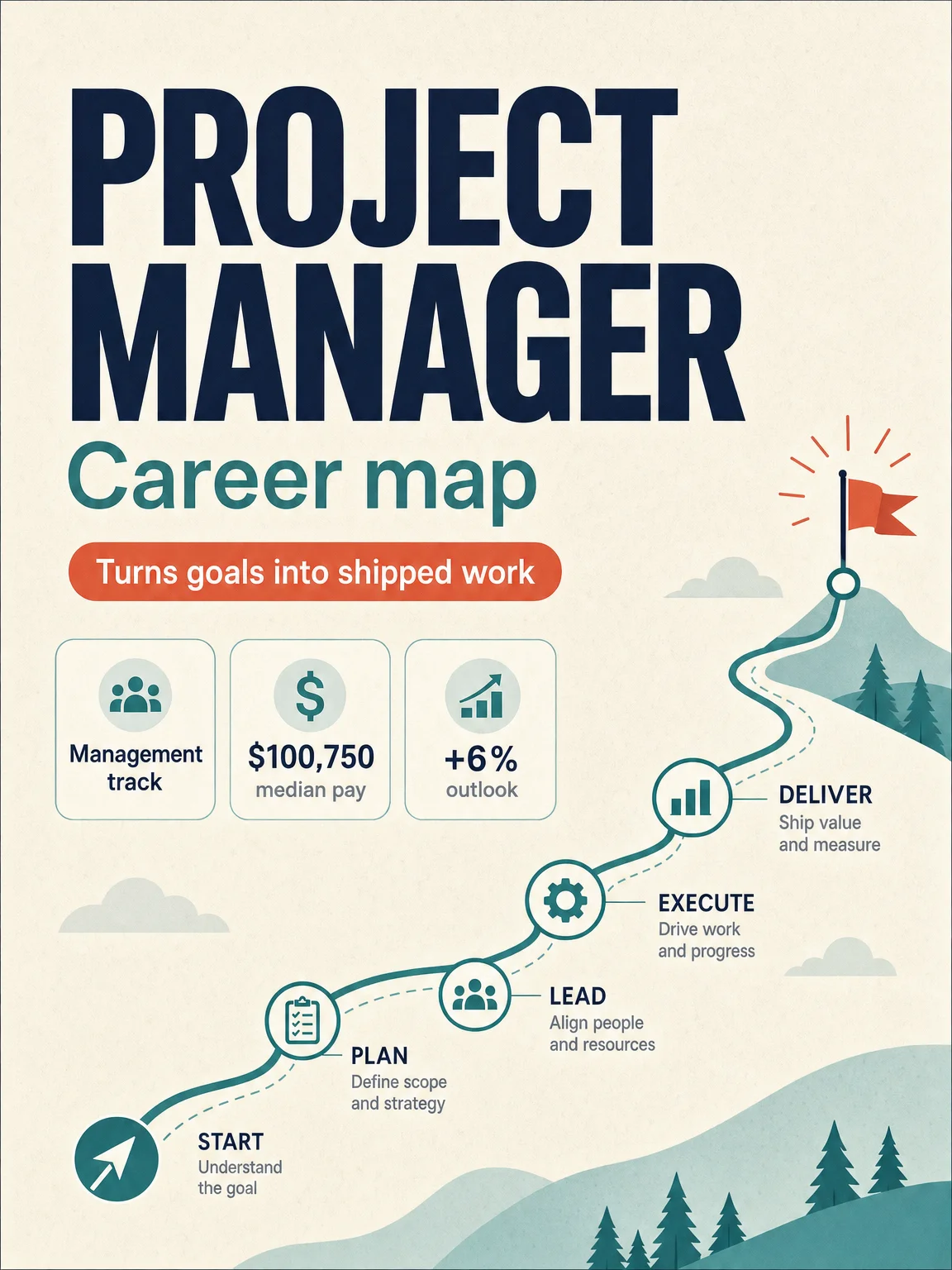
Slide 1 — cover
The quick read: project management is a management-track role with a 2024 median pay of $100,750 and a 6% projected U.S. employment growth rate from 2024 to 2034. 1
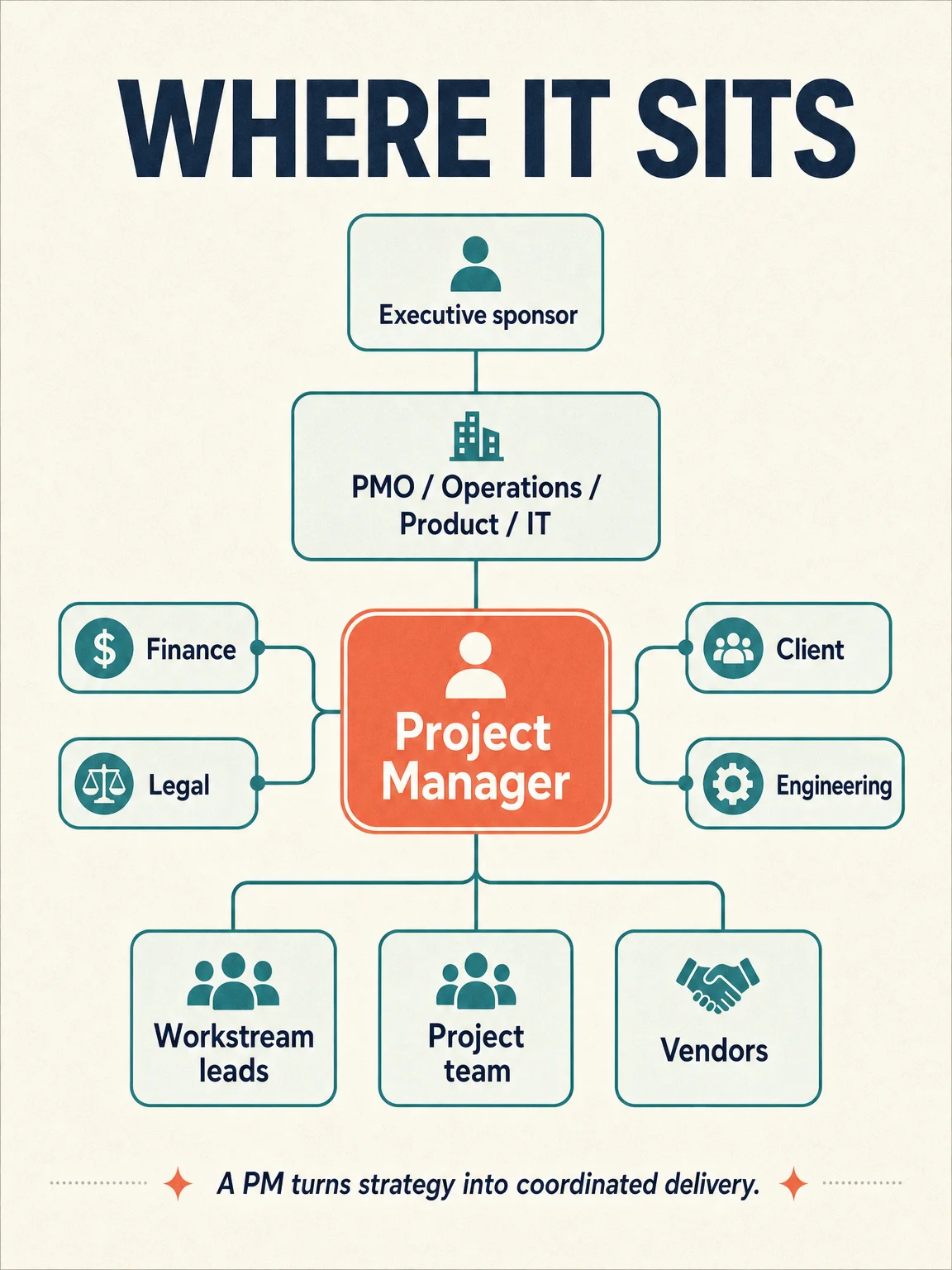
Slide 2 — where it sits
Project managers usually connect an executive sponsor or functional leadership group with the teams doing the work: product, operations, IT, engineering, finance, procurement, vendors, and clients. That org-chart placement comes from the role's formal duties: communicate requirements, build plans, assign responsibilities, coordinate vendors, report status, and guide technical staff. 1 2
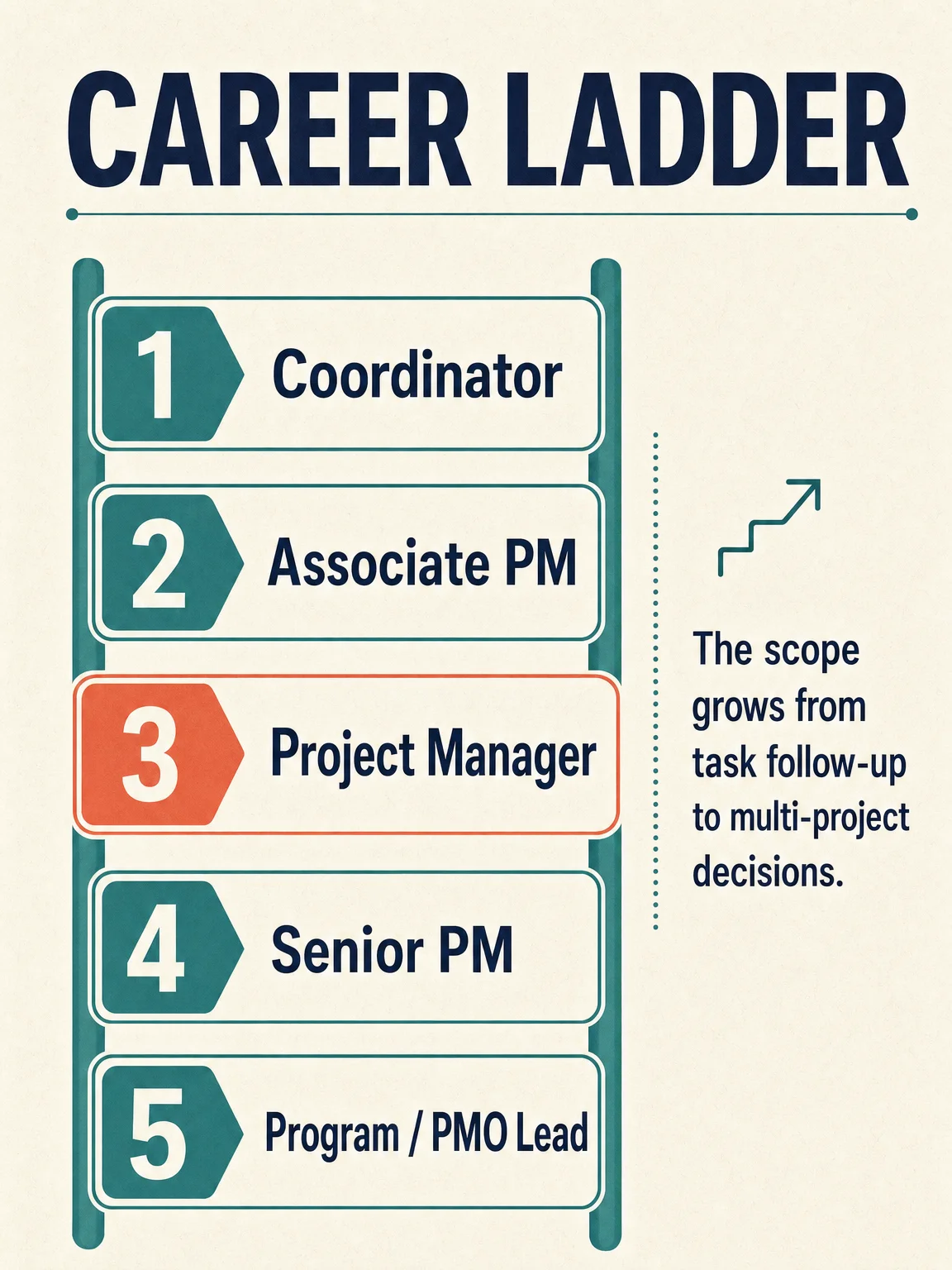
Slide 3 — career ladder
A typical ladder moves from project coordinator to associate project manager, project manager, senior project manager, and then program, portfolio, or PMO leadership. BLS notes that project management specialists may start on smaller projects and advance to larger, more complex work; Atlassian's career-path guide names senior project manager, program manager, portfolio manager, PMO manager, consultant, and coach as common paths. 1 3
Slide 4 — what you own
The responsibility set is broad but practical: define scope, build and update plans, schedule work, coordinate people and vendors, monitor costs, track milestones, handle changes, produce documents, and keep managers or customers informed. 2
Slide 5 — industry fit
BLS lists the largest employer groups for project management specialists as professional, scientific, and technical services (28%), construction (21%), manufacturing (7%), administrative and support services (5%), and finance and insurance (4%). The same BLS outlook projects 6% employment growth from 2024 to 2034, with about 78,200 openings per year on average. 1
Best fit if you like: structured ambiguity, stakeholder tradeoffs, schedules, budgets, and the satisfaction of moving work from idea to done.
Comments